
As a supplier with over a decade of experience specializing in large-size acrylic sheets, we at OLFA Plastic firmly believe that superior sheet performance begins with proper storage. Large acrylic sheets—typically defined as panels with a minimum thickness of 1.8 mm and dimensions starting at 1.22m × 1.83m—are widely used across advertising signage, architectural décor, industrial modeling, and fabrication due to their excellent clarity, weather resistance, and machinability.
However, the physical properties that make PMMA (Polymethyl Methacrylate) so valuable also make it sensitive to environmental conditions. This article outlines best practices for storing large acrylic sheets, drawing from real-world logistics and warehousing scenarios. Proper storage is not just about stacking—it’s about preserving performance, avoiding costly defects, and protecting your investment.
1. Environmental Control: Balancing Temperature and Humidity
Large acrylic sheets are highly sensitive to environmental fluctuations. The two most critical factors for storage are temperature and humidity.
Temperature: Avoid Extremes, Prioritize Stability
Acrylic has a thermal expansion coefficient of approximately 8×10⁻⁵/°C—much higher than glass. At storage temperatures exceeding 30°C, internal stress can release rapidly, causing edge curling or surface bulging. When the temperature drops below 10°C, the material becomes brittle and susceptible to chipping or cracking during handling or processing.
Recommended Range: 18–25°C (typical indoor conditions).
Avoid placing sheets near heat sources (radiators, HVAC exhaust, furnaces), and never store under direct sunlight. One of our clients once left a stack exposed in an open-air yard—summer heat caused permanent central warping.
Humidity: Dynamic Balance of Ventilation and Moisture Control
While acrylic doesn’t absorb water, its surface can adsorb moisture in high-humidity environments (above 70%), potentially leading to hydrolysis, which results in a foggy appearance and reduced light transmittance. In low humidity (below 30%), static buildup and increased brittleness are common issues.
Recommended Range: Relative humidity of 40–60%.
In humid regions or rainy seasons, install dehumidifiers, regularly inspect seals on doors and windows, and avoid placing sheets near unsealed masonry. In dry winters, add humidifiers or water basins to maintain moisture, but avoid splashing water directly onto sheets.

2. Stacking Methodology: Mechanical Logic of Support and Spacing
Large-format acrylic panels are heavy—e.g., a single 10mm thick, 2m × 1.5m sheet weighs around 28kg. With a surface hardness of just 2–3 on the Mohs scale (similar to a fingernail), improper stacking is the leading cause of scratches and deformation.
Base Support: Elevation and Load Distribution
Never stack sheets directly on the floor. Maintain at least 10 cm of ground clearance to avoid:
- Moisture seeping in from the ground
- Uneven surfaces (cement bumps, tile joints) causing long-term warping
Recommended Setup:
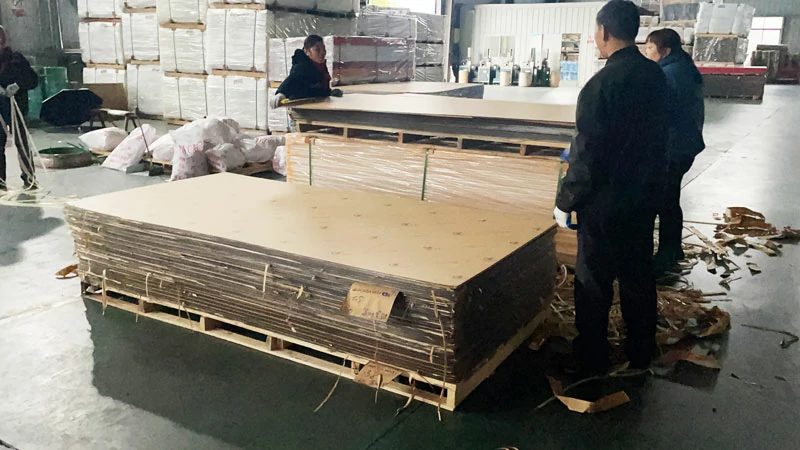
Use custom wooden pallets with a minimum height of 15 cm. Wrap the pallets in moisture-proof film to avoid reverse absorption. For oversized sheets, add anti-slip metal plates on top of the pallet to evenly distribute pressure.
Interlayer Spacing: Soft Padding for Protection
Between each sheet layer, insert cushioning materials such as EPE foam, dense polyethylene boards, or clean soft cloth. Direct sheet-to-sheet contact causes the upper sheet to compress the lower one, often resulting in surface dents or edge scratches from adhesive residue or burrs.
Practical Tips:
- Padding thickness should be ≥2cm
- Stack height should not exceed 1.5m to prevent tilt during manual handling
- Even if protective film is applied, always use interlayers—film resists scratches, not pressure
Labeling and Orientation: Clarity and Safety
Place a label on the top sheet indicating size, thickness, batch number, and storage date. Keep all sheets oriented in the same direction (e.g., long side facing forward) to avoid uneven pressure points and potential tipping.

3. Daily Maintenance: Small Actions, Big Results
Storage is not a one-time setup. Ongoing maintenance ensures quality consistency and early detection of issues.
Cleaning: Gentle Is Essential
To remove dust, use neutral detergents (e.g., diluted dish soap) with a microfiber cloth. Avoid alcohol, acetone, or abrasive tools like steel wool—one client mistakenly used alcohol and irreversibly clouded the surface.
Always wipe dry with a clean cloth to prevent watermarks.
Dust Prevention: Cover Strategically
For long-term storage (over a month), cover the topmost sheet with transparent dust-proof film—make sure it’s ventilated to allow air circulation. If the storage area is dusty (e.g., near a construction site), clean the cover weekly.
Routine Inspection: Early Detection Prevents Costly Repairs
Assign staff to inspect weekly, checking:
- Edges for moisture or mold (clean with a soft brush and diluted vinegar)
- Surface for scratches (light scratches can be polished with toothpaste and cloth; deep ones need factory repair)
- Sheet deformation (if warping is found, reduce stack height or change base support)
- Temperature and humidity logs (use digital thermo-hygrometers for accuracy)
4. Emergency Handling: Extreme Weather Protocols
Even with climate-controlled storage, unexpected weather events can happen. Prepare in advance.
Typhoon Season / Heavy Rain: Seal and Drain
Ensure all doors and windows are tightly closed, and inspect for leaks. Use plastic tarps for emergency cover. Place industrial desiccants or anti-moisture mats indoors, and activate dehumidifiers continuously during rain.
Post-storm, remove standing water immediately—bottom sheet immersion causes irreversible damage.
Cold Waves / Freezing Temps: Gradual Warming
When moving sheets from outdoor cold to indoor heat, don’t place them near direct heaters. The thermal shock from >20°C difference may lead to cracking.
Proper Method: Use a buffer room with moderate temperature for 24 hours before transferring inside. Let the sheets slowly acclimate.
Summer Heatwaves: Shade and Ventilate
Without air-conditioning, install sun-blocking curtains and turn on exhaust fans to reduce heat buildup. If surface temperature exceeds 40°C, use a wet towel to lower temperature, but never soak the sheets.
Final Thoughts: Storage Is the Second Lifeline of Quality
Transporting large acrylic sheets from factory to site is just the beginning. Storage quality determines whether the material can deliver on its promise. At OLFA Plastic, we don’t just ship materials—we deliver a full-spectrum quality assurance system.
By adopting the strategies in this guide, customers can prevent avoidable losses and extend the service life of every sheet. A pristine sheet, stored under the right conditions, ensures that your designs shine and that your clients experience the brilliance of well-preserved materials.
Looking for high-performance, large-size acrylic sheets?
Contact OLFA Plastic today for expert material support, bulk ordering, and tailored shipping solutions.